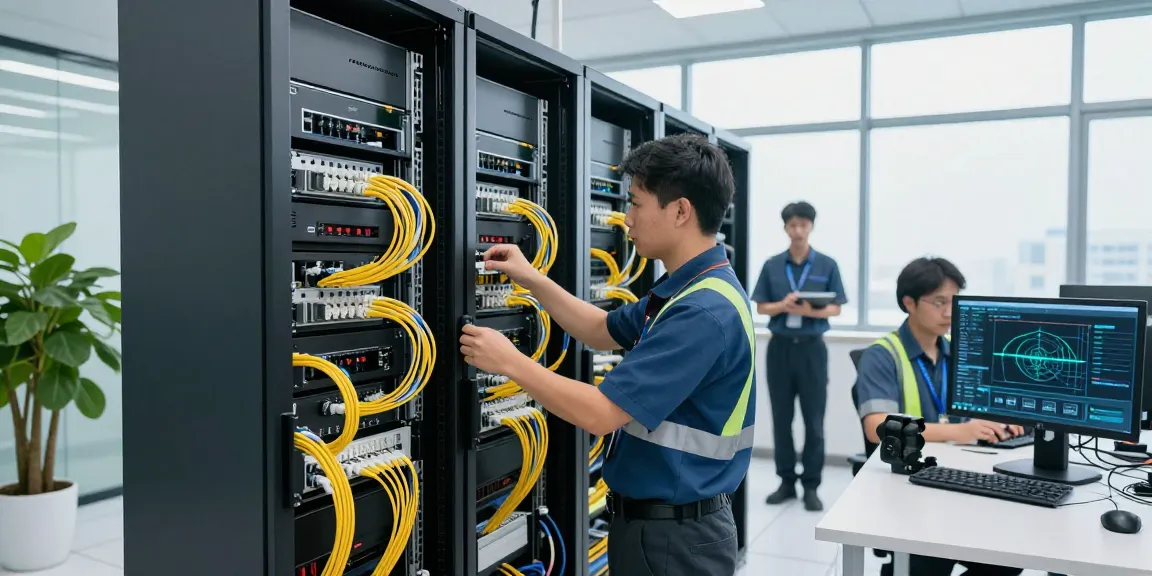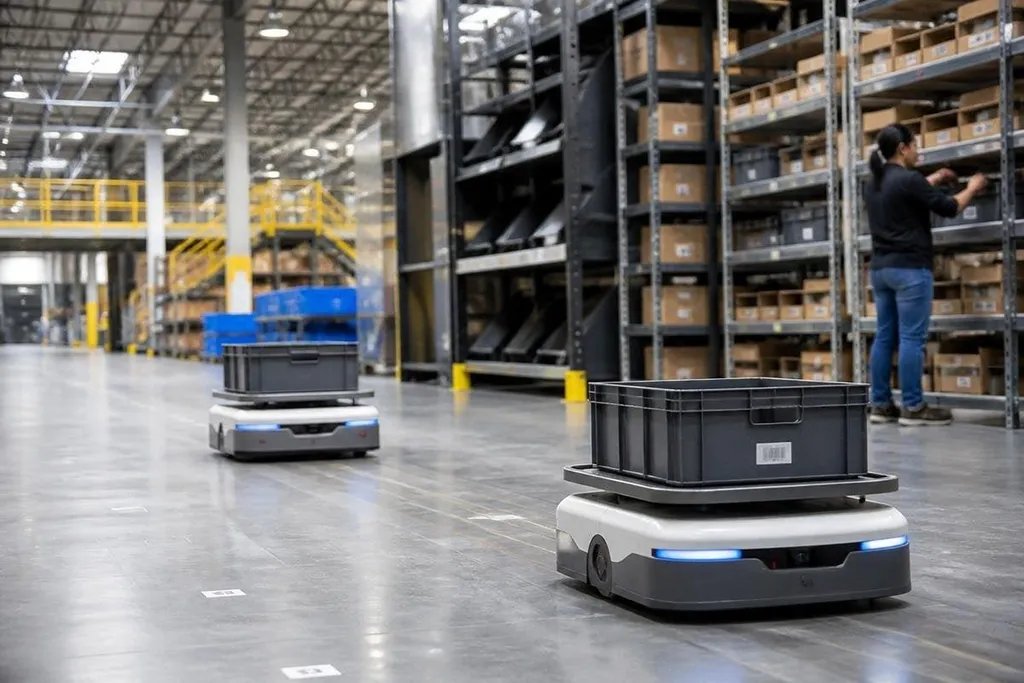
A supply chain can slow down at a factory, warehouse, port, or delivery site. Robots could change that flow by moving goods, checking stock, and handling repeatable tasks while people manage exceptions and decisions.
- Mobile robots can move bins and pallets inside facilities.
- Robotic arms can sort, pack, pick, and inspect goods.
- The main limits are cost, integration, safety, and changing product shapes.
Where robots fit first
The clearest use is movement inside controlled sites. Autonomous mobile robots can carry totes between storage, picking, packing, and shipping areas. They use sensors and maps to move around people and fixed equipment.
That work matters because internal transport happens many times during an order. Inside a warehouse, it can repeat a route without a person walking between stations, while staff focus on picking, quality checks, or damaged items.
Robotic arms fit tasks with a stable layout. They can sort parcels, place items into cartons, load parts into machines, or inspect surfaces with cameras. A gripper works well when the item shape, weight, and position stay within a known range.
The harder task is handling mixed goods. Soft bags, tangled cables, reflective packaging, and damaged cartons can confuse a vision system or make a gripper slip. A person still needs to resolve those cases.
What changes across countries
Supply chains cross sites with different layouts, software systems, labor rules, and power standards. A robot that works in one warehouse may need new maps, safety settings, and software links before it can run in another.
That makes integration as important as the robot itself. Warehouse management software must send jobs, receive status updates, and record where goods went. If those systems cannot exchange reliable data, the robot may move correctly while the wider process remains slow.
Robots can also give operators more direct information about work in progress. Their position, task status, and sensor readings can feed records about delays or blocked routes. The benefit depends on accurate data and a process for acting on it.
A supply-chain robot’s value shows up in fewer blocked routes or less staff time, and each claim needs a named site and measured result. Robot 24 reporting can put those figures beside the robot’s route, payload, battery stops, and human support. Those details lead to the limits that decide whether the change holds during daily work.
The limits that decide the result
Even a robot still needs charging, maintenance, software updates, safe work zones, and a person who can respond when a task fails.
The building also matters. Narrow aisles, uneven floors, poor lighting, and frequent layout changes can reduce the work a robot completes. A site may need new charging points, barriers, network coverage, or marked paths before operation starts.
Cost is another test. The purchase price is only one part of the decision.
A company also has to pay for installation, software links, training, repairs, spare parts, and changes to the building. A low-cost robot can become an expensive project if those needs appear late.
The effect on jobs will vary by task and site. Robots may reduce the amount of walking, lifting, and repeat handling in a shift. People may move toward supervision, maintenance, quality work, and exception handling, but that change requires training and clear staffing plans.
I'd be cautious about any plan that treats a robot as a complete answer before measuring the full process around it.
A practical decision guide
Use these checks before adding robots to a supply-chain site:
- Map the task: Record the route, item types, handoffs, delays, and failure cases.
- Check the mix: Test the full range of weights, sizes, surfaces, packaging, and damage conditions.
- Measure the site: Confirm aisle width, floor quality, lighting, network coverage, and charging space.
- Connect the software: Set out how orders, robot status, inventory records, and fault alerts will pass between systems.
- Plan human work: Assign people to supervision, recovery, maintenance, and safety checks before the first shift.
- Set a review point: Compare completed tasks, stoppages, repair time, and labor changes against the plan.
These checks keep the decision tied to work that can be measured. They also show where a smaller trial may make more sense than a site-wide rollout.
What happens next
Robots will likely spread first through repeatable work with clear routes and known goods. Wider use depends on better handling of mixed items, easier software setup, safe operation around people, and proof that the full site cost fits the business.
The deciding measure is not how many robots a company buys. It is how many orders, parts, or pallets reach the next step without a new delay.